Dose of History – Women & the Pharmaceutical Press
Home > AIHP News > Dose of History – Women & the Pharmaceutical Press
The early twentieth century saw a considerable increase in the amount of women working in medical fields. This was the product of a number of trends, including the Women’s Suffrage Movement, the professionalization of American medicine, and the gradual supplantation of apprenticeship in favor of academic training. Pharmacy in particular was comparatively accessible for many women because it was viewed as a trade rather than a profession, meaning that those who were skeptical of the competence of women were more likely to allow them to engage in work which was deemed less rigorous. Of course, women still faced extreme prejudice in these fields, and they only made up a small fraction of pharmacists.
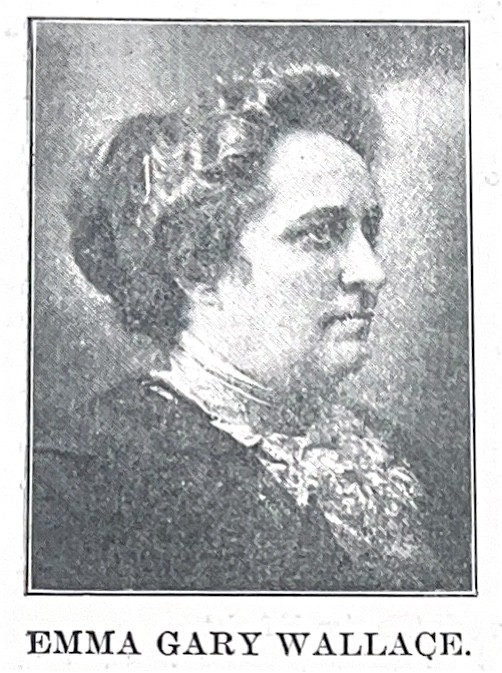
The growing presence of women in the field was reflected in the press surrounding the occupation. Several articles from the early twentieth century mention women in pharmacy and are fairly accepting of the concept, but are often tinged with patriarchal ideology. There was also a significant pharmaceutical publication written by a woman named Emma Gary Wallace. Although she wasn’t a pharmacist herself, Wallace was the wife of a prominent druggist in Boston and had an intimate familiarity with the field, being a member of the Women’s Organization of the National Association of Retail Druggists. Wallace wrote for the trade magazine The Pharmaceutical Era from 1908 to 1925, eventually obtaining her own regular column titled “Women in Pharmacy”. Since The Pharmaceutical Era was one of the most prominent pharmaceutical trade magazines in the country, Wallace accumulated a significant following over the years.
Wallace’s articles for “Women in Pharmacy” often consist of interviews with successful women pharmacists, many of whom ran their own storefronts. One example is published in the November, 1916 issue of The Pharmaceutical Era and interviews a pharmacist named Daisy Frick. Frick encourages women to study pharmacy, stating “[o]f all professions, it seems to me that Pharmacy is the one to which woman is best adapted”. Frick then goes on to state the benefits of running her own pharmacy: “The privilege of being your own boss, of having your own purse, of using your own time […] are all very pleasing and tend to make for contentment and happiness”. Indeed, pharmacy was a way for many women to assert their autonomy and provide for themselves, making it an enticing alternative to domestic work.
In many cases, pharmacy and politics intersected. One article titled “Women Pharmacists and the Franchise”, published shortly after women obtained the right to vote, sheds light on Wallace’s political views. In the beginning of the article, Wallace is celebratory of the victory for the Women’s Suffrage Movement and notes that women pharmacists could be consolidated into a unified voting bloc opposed to “oppressive laws which at the present time are a handicap to pharmacists and through them to women and children in the home”. Ultimately, Wallace stresses unity between men and women. “We will eliminate political hard feelings and differences”, states Wallace, arguing that women are less partisan than men and therefore more willing to seek compromise. In the final paragraph, Wallace calls on newly enfranchised women to use their political power to push for laws furthering public health, which Wallace believed to be a central responsibility of the pharmacist.
This Dose of History was brought to you by AIHP Intern, Leo Ryan.
Bibliography:
Gallagher, Teresa Catherine. “From Family Helpmeet to Independent Professional: Women in American Pharmacy, 1870-1940.” Pharmacy in History 31, no. 2 (1989): 60–77. http://www.jstor.org/stable/41112484.
Higby, Gregory J. “Emma Gary Wallace and Her Vision of American Pharmacy.” Pharmacy in History 40, no. 2/3 (1998): 67–76. http://www.jstor.org/stable/41111876.
Wallace, Emma Gary. “Women Pharmacists and the Franchise.” Pharmaceutical Era, October, 1920: 315. Obtained through the American Institute for the History of Pharmacy’s archives.
Wallace, Emma Gary. “Advantages for Women in Pharmacy – As Seen by Miss Daisy Frick”. Pharmaceutical Era, November, 1916: 435. Obtained through the American Institute for the History of Pharmacy’s Archives.
Actively engaged in preserving the documents of pharmacy's past and developing materials for understanding the future.
January, 21, 2026, 11:00 am (Central):Pharmacy History Working Group: Spring Semester Welcome Back Event: A critical reading of Jacqueline Susann's Valley of the Dolls, hosted by Kelly O'Donnell, Towson Unviersity. February 18, 2026, 11:00 am (Central):Pharmacy History Working Group: Audrey Ke Zhao, UC Santa Cruz & CHSTM Research Fellow March 18, 2026, 11:00 am (Central): Pharmacy History Working Group: Ryan A. Kashanipour, University of Arizona
Upcoming events of interest to pharmacists and historians of pharmacy, pharmaceuticals, medicines, science, and related fields.
December 7-11, 2025: ASHP Midyear, Las Vegas, NV. January 14, 2026: JCPP January 2026, Alexandria, VA. March 27-30, 2026: APhA 2026, Los Angeles, CA. April 18-21, 2026: NACDS Annual Meeting, Palm Beach, FL. June 3-7, 2026: AAHM 2026, Buffalo, NY. June 13-17, 2026: ASHP Pharmacy Futures, Charlotte, NC. June 25, 2026: JCPP June 2026, Alexandria, VA. July 18-21, 2026:AACP Pharmacy Education, Grapevine, TX. September 17, 2026: JCPP September 2026, Alexandria, VA. October 3-6, 2026: 2026 NCPA Annual Convention, Kansas City.